Meditation & Mindfulness
Meditation trains where attention rests and how kindly you return when it drifts—whether you focus on breath, body, sound, or a chosen phrase. Mindfulness widens the same attitude into ordinary moments: washing dishes, walking, or listening without immediately fixing or judging. Neither practice demands a blank mind or spiritual belief; both reward patience and repetition. They pair naturally with steady prāṇāyāma, gentle āsana to release physical restlessness, and the framing ideas in yoga basics. Read safety rules and honour your mental-health context as you explore.
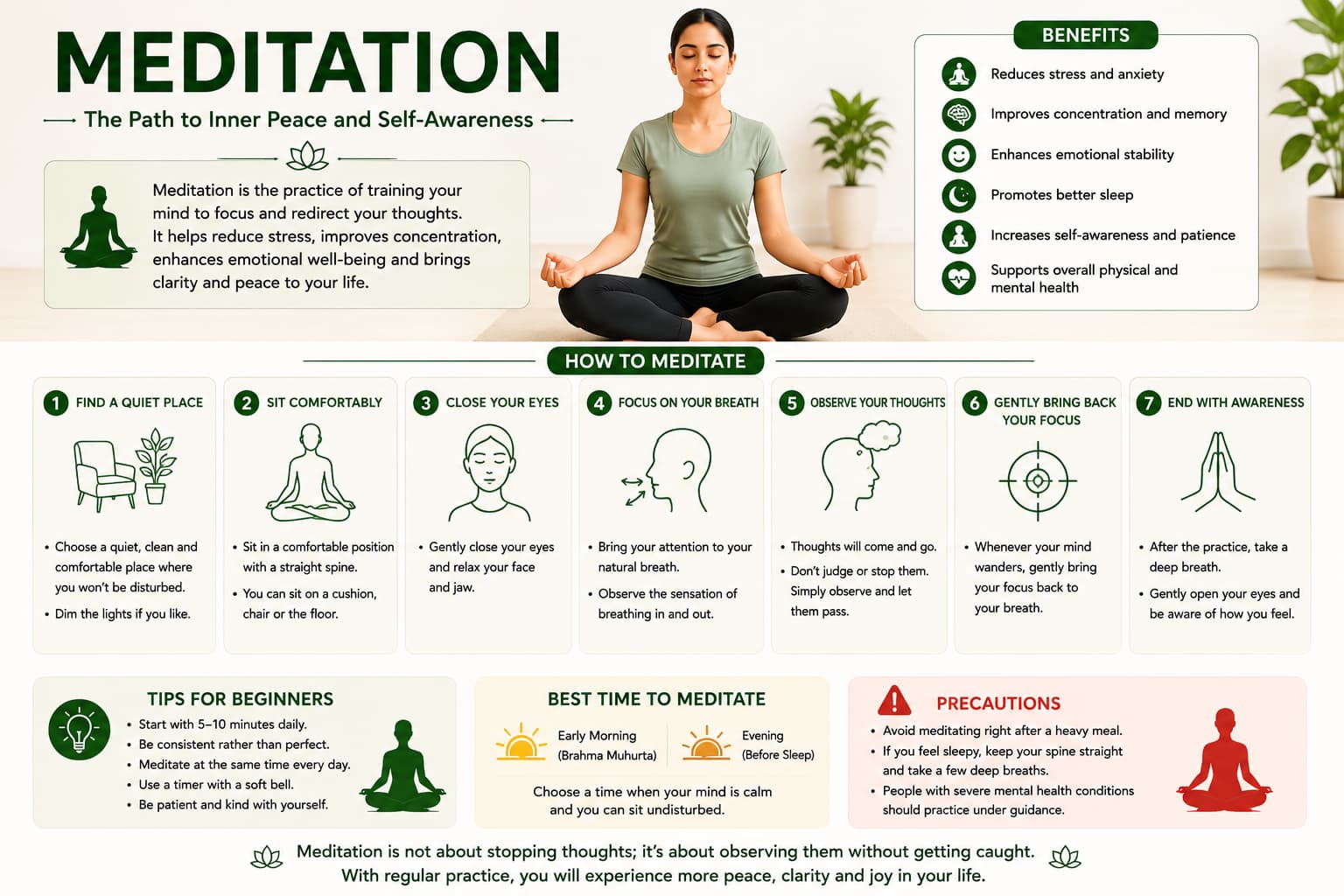 Meditation guide with posture, attention steps, benefits, beginner tips, best practice time and precautions.
What is Meditation?
Meditation is deliberate training of attention and metacognition: you choose an anchor (breath at the nostrils, rise and fall of the belly, sounds in the room, a word or image) and practise noticing when attention wanders—then steering it back without calling yourself a failure. The “goal” is not a permanently empty mind; that state may appear briefly for some people, but the everyday skill is recognition + return, which also supports the wider mental health guide.
Common families of practice
- Concentration (samatha-like): Narrow focus on one object to steady the mind.
- Open monitoring (insight-leaning): Watch thoughts and sensations arise and pass without fixing a story to each one.
- Loving-kindness / compassion: Repeat phrases or visualisations aimed at goodwill—for self and others.
- Body-based: Scanning sensations from head to toe or staying with contact points (seat, feet, hands).
Secular programmes (such as MBSR-style curricula) often blend breath awareness with body scan and gentle movement; religious traditions embed meditation inside ethics, ritual, or devotion. You can benefit from technique without adopting a worldview you do not hold—though respecting lineage matters when you teach others.
Guided Meditation for Beginners
Guided sessions—audio, video, or live—give your mind a shared rhythm: when to notice breath, when to widen awareness, when to close. For many beginners, external pacing reduces anxiety about “doing it wrong,” and pairing it with simple breath practice or a few grounding asanas can settle restlessness before sitting.
How to choose and use recordings
- Start with 5–12 minutes; lengthen only when restlessness feels workable, not forced.
- Prefer teachers who normalise distraction and avoid guilt language.
- Try a few voices; timbre and speed affect nervous system response more than people expect.
- Use one programme consistently for a couple of weeks before hopping endlessly—comparison can become avoidance.
Posture and environment
Chair or cushion both work if the spine is alert but not rigid. Dim lights, phone in another room, and a light shawl reduce drop in body temperature during stillness. If you fall asleep every time, try eyes slightly open, earlier in the day, or a walking meditation instead.
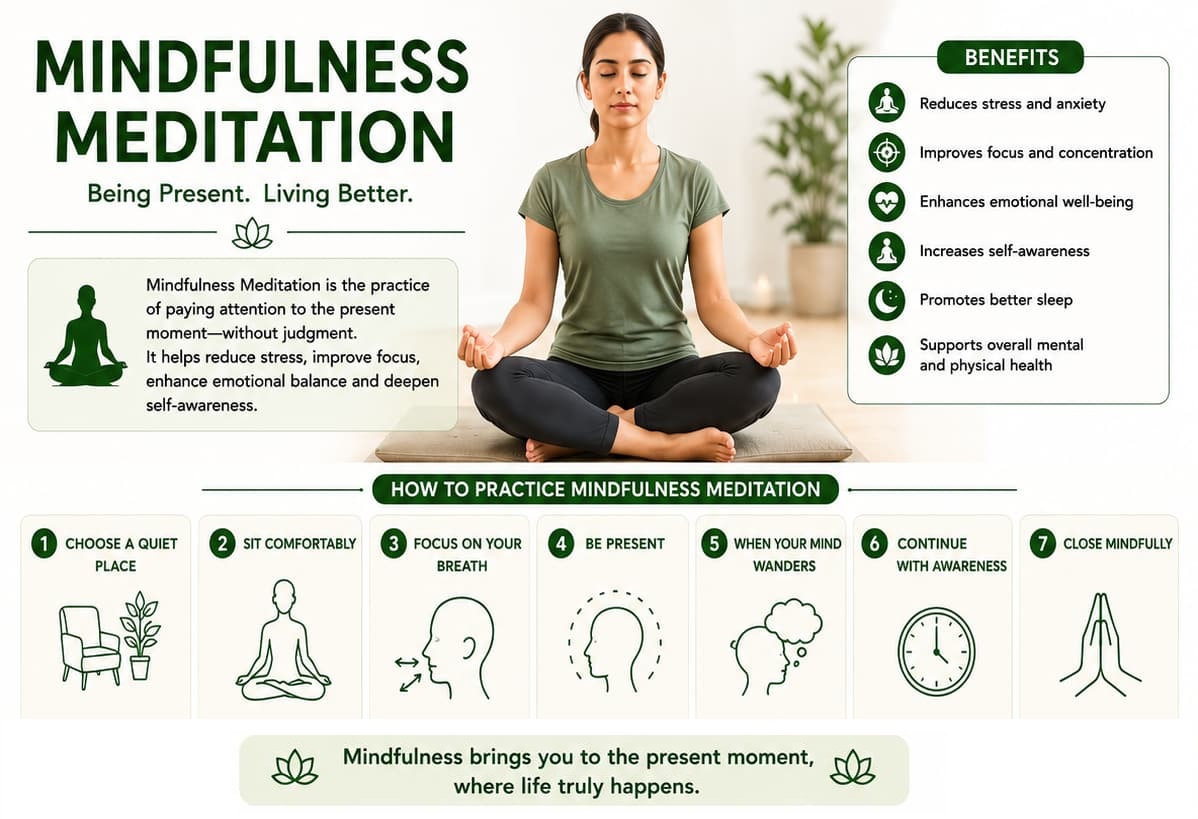 Mindfulness meditation guide showing how to practice present-moment awareness with steps and benefits.
Mindfulness Meditation
Mindfulness is receptive awareness of present experience—sensations, sounds, thoughts, urges—with curiosity rather than immediate reactivity. Formal sitting practice builds the skill; informal “micro-practices” transfer it to life.
Informal experiments you can try this week
- Mindful eating: First three bites with full attention to texture, temperature, and swallow—no screen.
- Mindful walking: Ten steps indoors or outdoors feeling heel, ball, toe; when mind plans dinner, note “planning” and return to feet.
- STOP pause: Stop, Take a breath, Observe body and mood, Proceed—useful before sending a heated message.
Mindfulness is not the same as passivity or positive thinking; you still act, set boundaries, and seek justice. The practice changes how quickly you notice habit loops, not whether you care about outcomes.
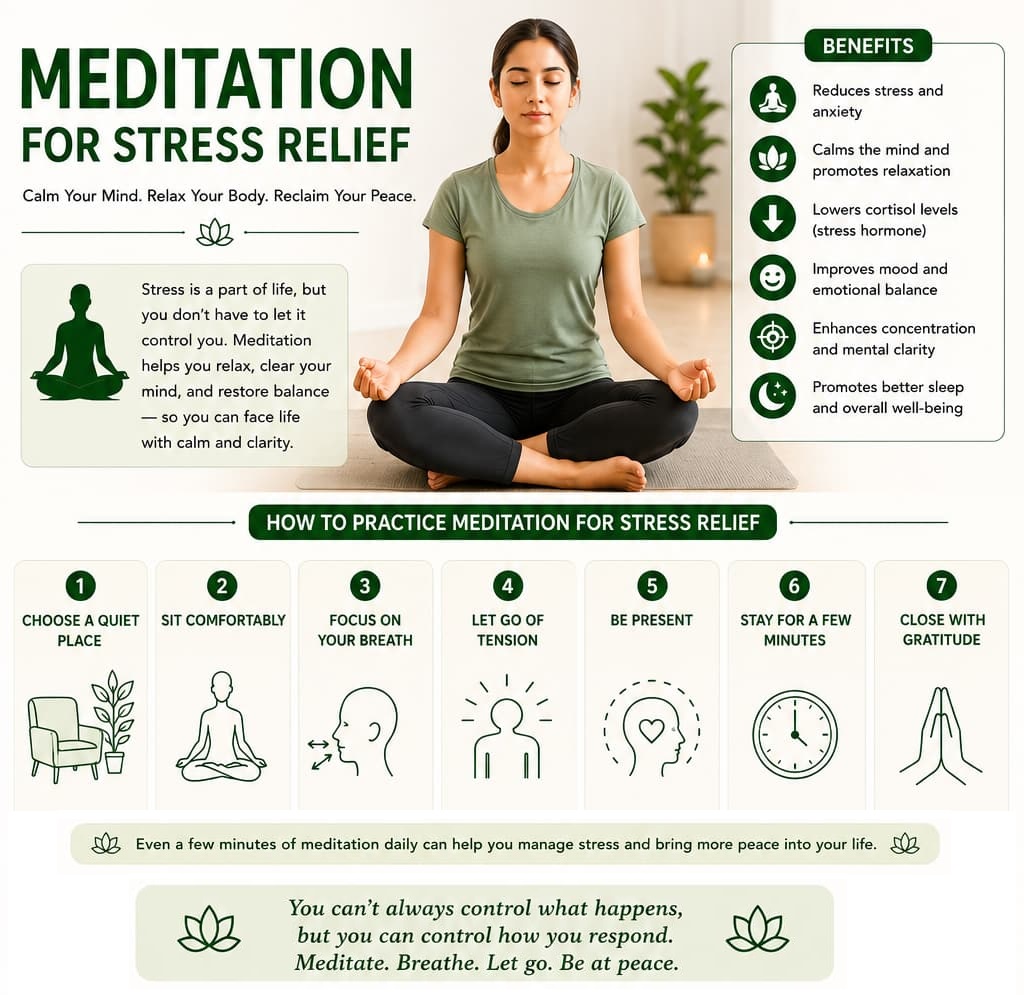 Meditation for stress relief guide with calming practice steps, benefits and relaxation reminders.
Meditation for Stress Relief
Chronic stress keeps the sympathetic nervous system on high alert; meditation and related breath practices can support parasympathetic tone—digest, repair, social engagement—for some people, some of the time. Effects depend on sleep, nutrition, trauma history, workload, and whether you feel safe enough to sit still.
Evidence-informed expectations
Randomised trials show modest to moderate benefits for stress and anxiety symptoms in grouped averages; your path may be better, slower, or different. Meditation complements therapy and medication when those are indicated—it does not replace clinical care for major depression, panic disorder, PTSD, or bipolar illness.
Practices often described as soothing
- Lengthened exhale or gentle Bhramari before sitting
- Body scan with emphasis on heavy, warm, or supported areas
- Short loving-kindness phrases if self-criticism dominates stress
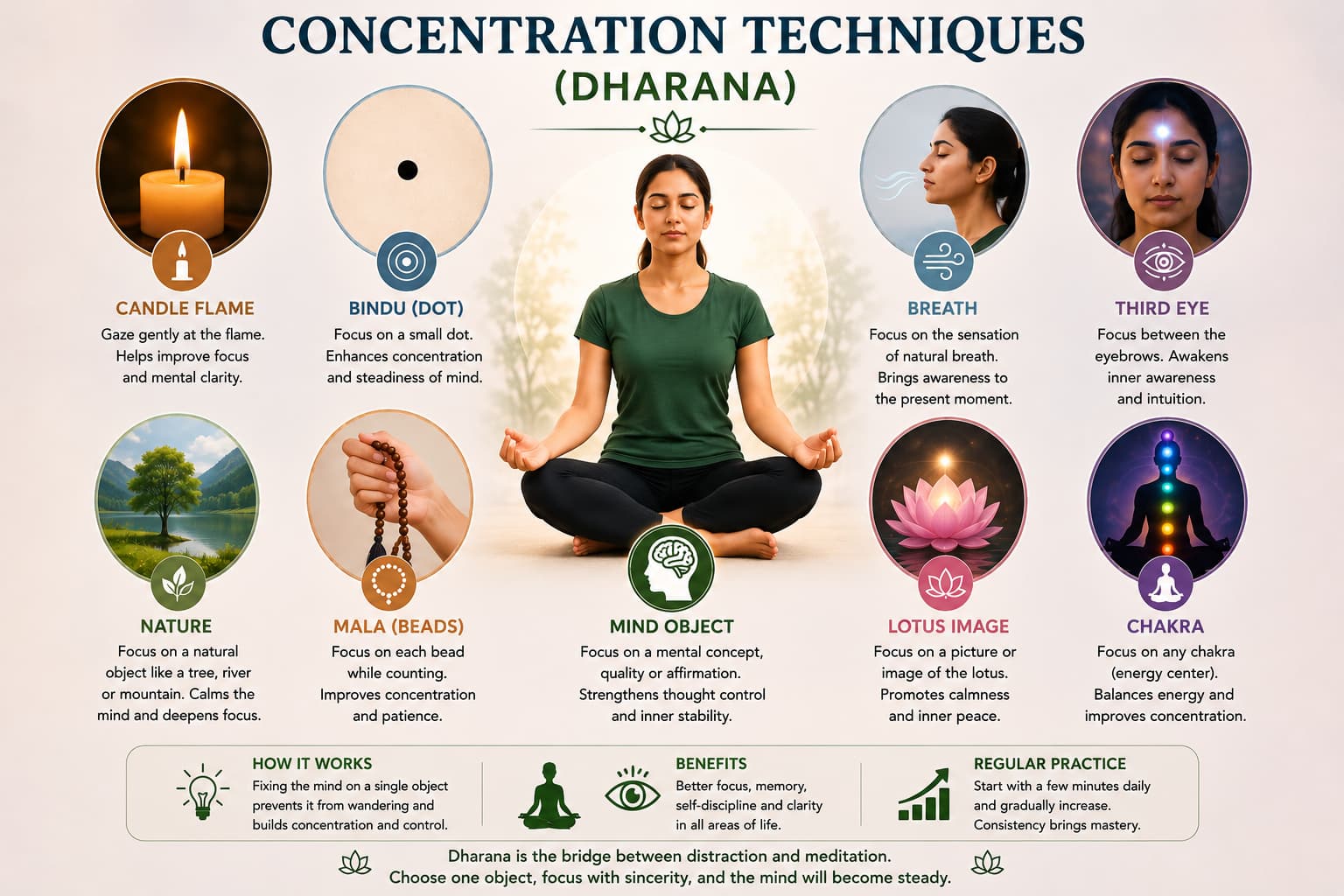 Dharana concentration guide with focus objects, how concentration works, benefits and regular practice tips.
Concentration Techniques (Dharana)
In classical yoga maps, Dharana is the limb of holding attention on one field—a mantra syllable, breath segment, chakra image, or external flame—before meditation deepens into uninterrupted flow (dhyāna). For modern beginners, think of it as reps for attention muscle: short, clear targets and frequent gentle returns.
Safe ways to experiment
- Breath count: Inhale-exhale as “one” up to five, then restart; if you lose count, begin again without self-attack.
- Mantra whisper: Soft mental repetition of a chosen word; volume stays internal.
- Visual object: If using a candle, keep a soft gaze, avoid staring contests that strain eyes; epilepsy or migraine with visual aura may rule flame work out—ask your clinician.
Longer forced holds—of breath or attention—belong with experienced teachers who know your health context. Dizziness, dissociation, or headache mean back off and return to simpler breath awareness.
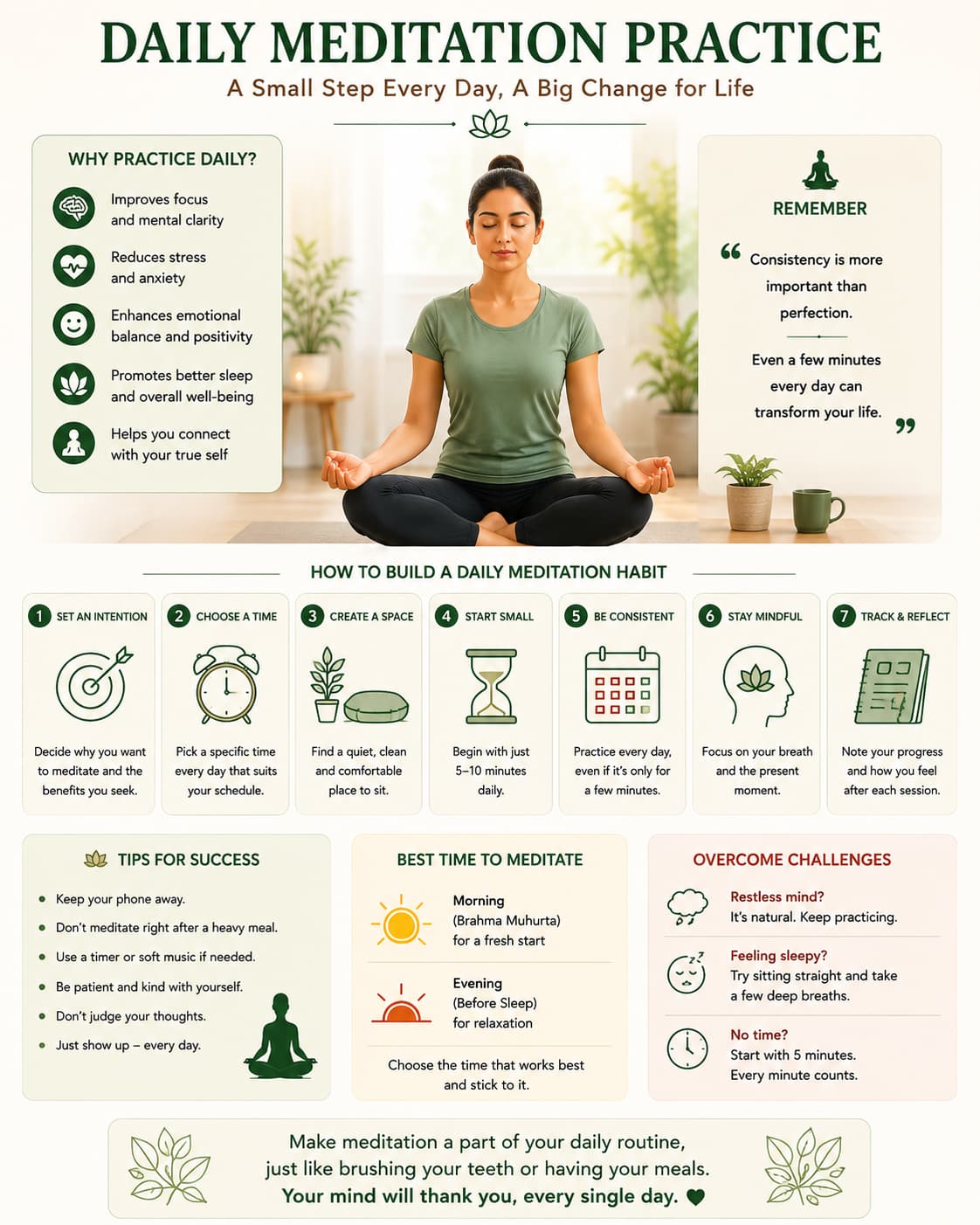 Daily meditation practice guide with habit steps, benefits, success tips, best practice time and challenge solutions.
Daily Meditation Practice
Habits stick when the commitment is small enough to survive bad days and anchored to existing cues—after brushing teeth, before the household wakes, or right after shutting the work laptop. “Same time, same place” helps, but flexibility prevents all-or-nothing collapse when travel or illness appears.
Sample weekly rhythm
- Five weekday micro-sits (5–8 minutes): Breath at belly or nostrils; end with three slow exhales.
- One longer guided session (15–25 minutes): Body scan or mindfulness recording you trust.
- One “life practice” day: Mindful walk, meal, or conversation without formal cushion.
- Integration: After movement or yoga routine, sit briefly so the body’s openness meets mental settling.
Track streaks lightly—curiosity beats self-policing. Missed days are data about schedule or avoidance, not moral failure. Resume at half your usual length rather than compensating with marathon sits that breed aversion, and use progress tracking if you want a kinder structure.