Independence Day of India (August 15)
Independence Day Visual Highlights
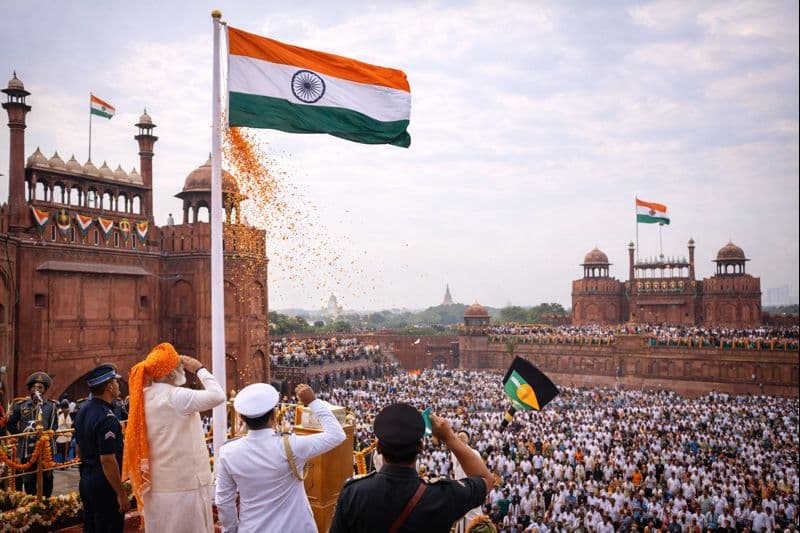
Flag Hoisting at Red Fort
The Prime Minister of India hoists the national flag and delivers the Independence Day speech from the ramparts of the historic Red Fort in Delhi.
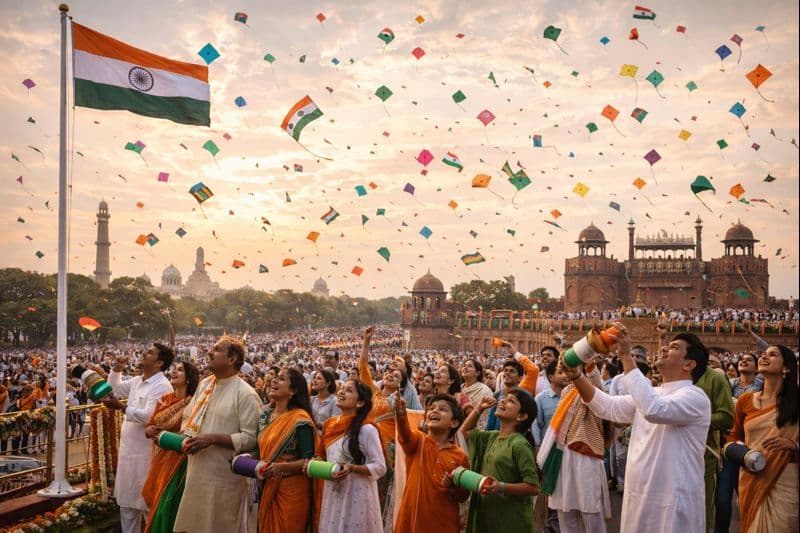
Kite Flying Festivities
Colorful kites fill the sky across India on Independence Day, symbolizing freedom and the spirit of celebration in cities and villages alike.
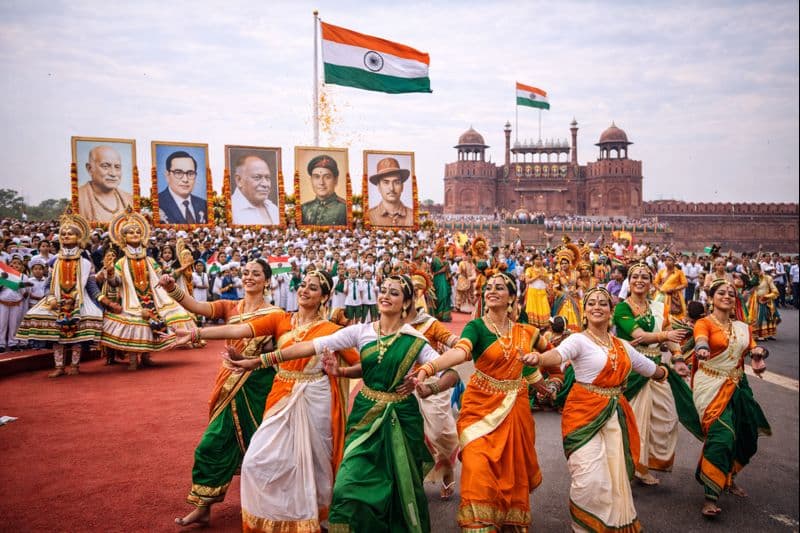
Cultural Performances
Schools, colleges, and communities organize patriotic songs, dances, and dramas depicting India's freedom struggle and cultural diversity.
What is Independence Day? History & Significance
Historical Background
After nearly 200 years of British colonial rule, India gained independence on August 15, 1947. The Indian Independence Act 1947 passed by the British Parliament partitioned British India into two new independent dominions: India and Pakistan.
The transfer of power was marked by the famous "Tryst with Destiny" speech by Jawaharlal Nehru at the Constituent Assembly in New Delhi at midnight on August 14-15, 1947.
Significance
Independence Day represents the culmination of India's long struggle for freedom and self-determination. Key significance includes:
- Celebration of India's sovereignty and freedom from colonial rule
- Honoring the sacrifices of freedom fighters and martyrs
- Reaffirmation of commitment to national unity and integrity
- Reflection on India's democratic journey and progress
- Promotion of patriotism and national pride among citizens
Key Events in India's Freedom Struggle
First War of Indian Independence (Sepoy Mutiny) - First major uprising against British rule.
Formation of Indian National Congress - Beginning of organized political movement.
Jallianwala Bagh Massacre - Turning point in India's freedom movement.
Civil Disobedience Movement & Salt Satyagraha led by Mahatma Gandhi.
Quit India Movement - "Do or Die" call by Gandhi for complete independence.
India gains independence from British rule. Jawaharlal Nehru becomes first Prime Minister.
Did You Know?
Lord Mountbatten, the last Viceroy of India, chose August 15 as Independence Day because it was the second anniversary of Japan's surrender in World War II. The Indian Independence Act received royal assent on July 18, 1947, and came into effect on August 15, 1947.
Main Events at Red Fort
The Independence Day celebration in New Delhi is the centerpiece of national observances:
- Flag Hoisting: Prime Minister hoists the national flag at Red Fort
- Speech: Prime Minister addresses the nation from Red Fort ramparts
- Parade: Military and paramilitary forces display
- Cultural Programs: Schools and cultural groups perform
- 21-Gun Salute: Honor guard and gun salute
National Traditions
Independence Day is celebrated across India with various traditions:
- Kite Flying: Symbolizes freedom; skies filled with colorful kites
- Flag Hoisting: In government offices, schools, and public spaces
- Patriotic Songs: National anthem and patriotic songs sung
- Cultural Events: Plays, dances, and poetry recitations
- Building Illumination: Government buildings decorated with lights
Community Celebrations
Independence Day is celebrated at grassroots level across India:
- Flag distribution and hoisting in villages and towns
- Community cleaning drives and social service activities
- Distribution of sweets and food in communities
- Patriotic film screenings and cultural competitions
- Special prayers and religious ceremonies for national prosperity
Key Freedom Fighters of India
Mahatma Gandhi
Father of the Nation, leader of non-violent civil disobedience. Led Salt Satyagraha, Quit India Movement. Philosophy of Satyagraha inspired global freedom movements.
Non-Violence Civil DisobedienceJawaharlal Nehru
First Prime Minister of independent India. Close associate of Gandhi. Delivered iconic "Tryst with Destiny" speech at independence. Architect of modern India.
First PM Modern IndiaSubhas Chandra Bose
Founded Indian National Army (INA) with slogan "Give me blood and I will give you freedom." Sought international support for India's freedom struggle.
INA RevolutionarySarojini Naidu
Nightingale of India, poet and political activist. First Indian woman president of Indian National Congress. Participated in Salt Satyagraha and Quit India Movement.
Poet Women LeaderBhagat Singh
Revolutionary socialist who became influential figure in Indian independence movement. Executed at age 23. Symbol of youth resistance against British rule.
Revolutionary MartyrDr. B.R. Ambedkar
Chief architect of Indian Constitution. Fought for rights of Dalits and marginalized communities. Social reformer and economist in independence movement.
Constitution Social ReformerFacts About India's Freedom Struggle
Longest Freedom Movement
India's struggle for independence spanned nearly 90 years of organized movement, from the formation of Indian National Congress in 1885 to independence in 1947.
Partition Tragedy
Independence came with Partition, creating India and Pakistan. One of largest mass migrations in history with 10-15 million displaced and estimated 1 million deaths.
Non-Violent Movement
India's freedom struggle under Gandhi was unique for its emphasis on non-violence (ahimsa) and civil disobedience, inspiring movements worldwide.
Women's Participation
Women played crucial roles: Sarojini Naidu, Kamala Nehru, Kasturba Gandhi, Aruna Asaf Ali, and countless others participated in protests and leadership.
Interesting Facts About Independence Day
Midnight Independence
India became independent at the stroke of midnight on August 14-15, 1947. The Constituent Assembly met at 11 PM on August 14 for the historic session.
First Flag Hoisting
The first national flag was hoisted on August 7, 1906, at Parsee Bagan Square in Calcutta. The current flag was adopted on July 22, 1947.
Radio Broadcast
Jawaharlal Nehru's "Tryst with Destiny" speech was broadcast on All India Radio at midnight on August 14-15, 1947, reaching millions across the country.
Other Independence Days
South Korea (August 15, 1945), Bahrain (August 15, 1971), and Republic of Congo (August 15, 1960) also celebrate independence on August 15.
Independence Day vs Republic Day
Independence Day (August 15)
- Significance: Marks independence from British rule (1947)
- Main Event: PM hoists flag at Red Fort and gives speech
- Focus: Freedom struggle and national liberation
- Speaker: Prime Minister addresses the nation
- Celebration: Kite flying, cultural events, flag hoisting
- Mood: Celebration of freedom and sovereignty
Republic Day (January 26)
- Significance: Constitution came into effect (1950)
- Main Event: President presides over parade at Rajpath
- Focus: Constitution and democratic values
- Speaker: No political speech, military parade focus
- Celebration: Military parade, tableaux, Beating Retreat
- Mood: Display of military strength and cultural diversity
"At the stroke of the midnight hour, when the world sleeps, India will awake to life and freedom."
— Jawaharlal Nehru, "Tryst with Destiny" speech
Related Important Day
AI-Generated Content
Content created with AI assistance. May contain errors. Verify with official sources.
Report errors: contact@nikhillearnhub.com