Krishna and the Butter Pot
Story Summary
"Krishna and the Butter Pot" is a delightful tale about little Krishna's mischievous adventures in Vrindavan. It shows how even divine beings can have playful, childlike qualities and teaches children about love, truth, and the innocence of childhood. The story emphasizes that mischief with love can be endearing, and truth always wins in the end.
This mythological story is perfect for bedtime reading, classroom storytelling, and family discussions. Ages 5–12.
What Kids Learn
- Myths and legends: Traditional tales pass values across generations.
- Values: Gods and heroes often teach right from wrong.
- Culture: Stories connect us to Indian and world heritage.
- Wisdom: Clever choices matter more than brute strength.
- Respect: Humility and devotion bring positive outcomes.
Before you read the full story, meet the characters of Krishna and the Butter Pot. This mythological story helps children enjoy reading while learning values and new ideas.
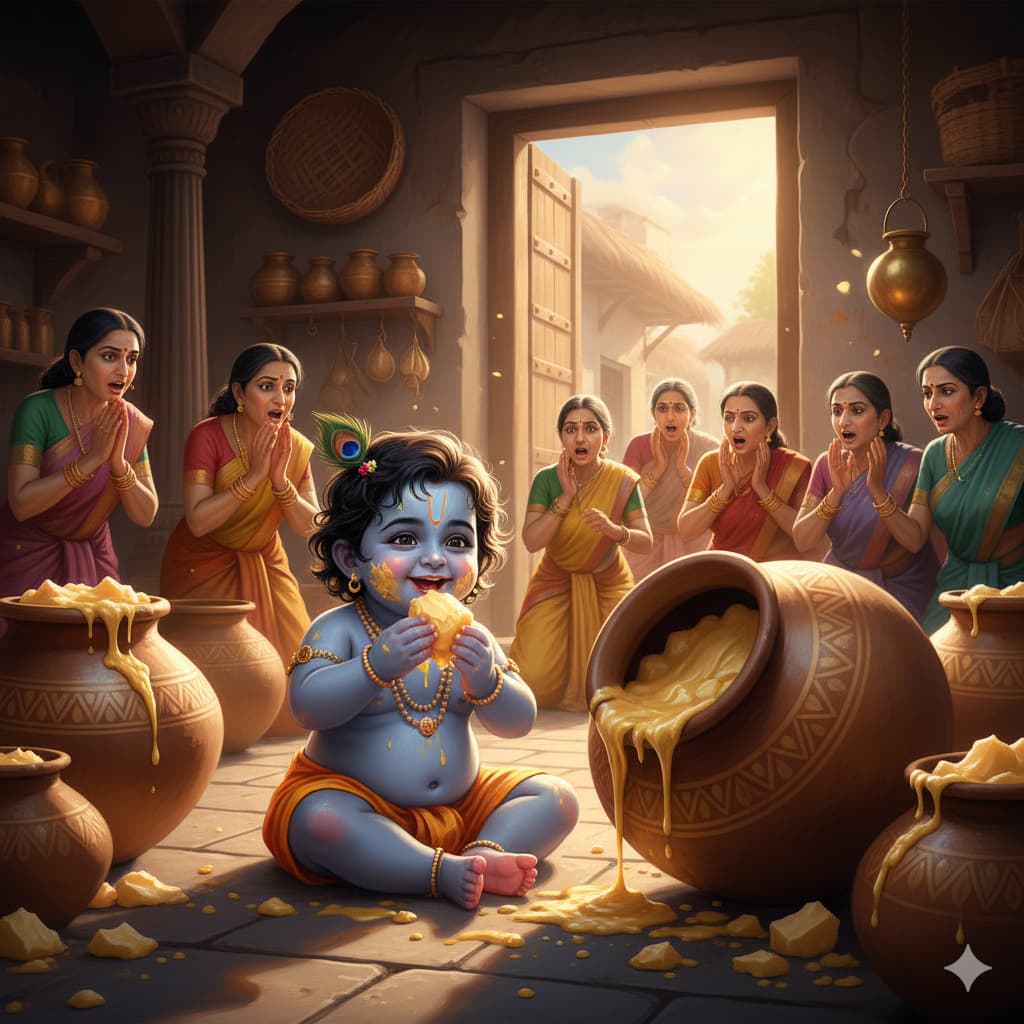
Main Characters
Krishna - The Mischievous Child
A playful and charming little boy with a special love for butter, known for his innocent mischief and divine smile. His dark blue skin and twinkling eyes make him instantly recognizable.
Yashoda - The Loving Mother
Krishna's adoptive mother who loves him dearly but sometimes gets frustrated with his playful antics. She represents unconditional maternal love and gentle discipline.
The Gopis - Village Women
The women of Vrindavan who often find their butter pots empty and know exactly who the culprit is! They represent community and shared experience.
The Butter Adventure
Scene 1: The Village of Vrindavan
Narrator: In the beautiful village of Vrindavan, where peacocks danced and cows grazed peacefully, lived a little boy named Krishna. With his dark blue skin and charming smile, he was the joy of the village.
Narrator: But Krishna had one weakness that often got him into trouble - he absolutely loved butter! The creamy, golden butter that the village women stored in clay pots was his favorite treat.
Mythological Context
In Hindu mythology, Krishna is known as Makhan Chor (butter thief) and is often depicted as a mischievous child who steals butter. This aspect represents his accessible, human-like qualities that make him beloved by devotees.
"Oh, that butter smells so delicious! I can't resist it! Just one little taste..."
The Great Butter Heist
Narrator: When Yashoda and the other women were busy with their work, Krishna would tiptoe into the kitchens. He would climb onto stools, reach for the butter pots hanging from the ceiling, and sneak a taste of the creamy delight.
Narrator: Sometimes he would share the butter with his friends and even the monkeys! His little hands and face would be covered in butter, but he didn't care.
"Yashoda! Your Krishna has been at my butter again! The pot is almost empty!"
"Oh dear! I'm so sorry. I'll have a talk with that little rascal. Krishna! Where are you?"
The Investigation
Narrator: Yashoda decided to find out what was happening to all the butter in the village. She set up a little test by placing a pot of butter in an easy-to-reach spot and pretended to be busy with her chores.
The Discovery
Narrator: Sure enough, little Krishna couldn't resist the temptation. He crept into the room, climbed onto a small stool, and reached for the butter pot. Just as he dipped his fingers into the creamy butter, Yashoda appeared!
"Krishna! I've caught you red-handed! Or should I say, butter-handed!"
The Innocent Smile
Narrator: Caught in the act, Krishna didn't try to run away or make excuses. Instead, he turned to his mother with the most innocent, heart-melting smile. His little face was smeared with butter, and his eyes twinkled with mischief and love.
Narrator: He looked at Yashoda with such pure love that her anger instantly melted away, just like butter in the sun.
"Mother, the butter was calling me! It said 'Krishna, come eat me!' How could I say no?"
A Mother's Love
Narrator: Yashoda couldn't stay angry with her beloved son. She hugged him tightly, butter stains and all. She realized that his mischief came from a place of innocence and joy, not from any bad intentions.
"My dear Krishna, I know you love butter, but you must learn to ask before taking. Truth and honesty are important, even for little things like butter."
A New Understanding
Narrator: From that day on, Yashoda made sure to keep a small pot of butter just for Krishna. And Krishna learned that being truthful and asking politely was much better than sneaking around. The gopis also started saving some butter for him, knowing how much he loved it.
"Thank you, Mother! I promise to always tell the truth. But can I have some butter now? Please?"
Happiness in Truth
Narrator: Krishna discovered that being truthful not only made his mother happy but also made him feel good inside. The butter tasted even sweeter when it was given with love rather than taken in secret. And so, the little butter thief became known for his honesty as much as for his love of butter.
Moral of the Story
Mischief with love; truth always wins. Even when we make mistakes or act mischievously, being truthful and honest is always the best path. Love and honesty can turn any situation into something beautiful. Innocent mischief comes from a place of joy, but truth and respect for others are what truly matter.
Discussion Points
Talk with your child about times when they were tempted to do something they shouldn't. Discuss how Krishna's innocent mischief was different from being deliberately naughty, and why telling the truth is always important even when we make mistakes. Ask what they think makes Yashoda such a good mother, and how love can help correct behavior better than anger.
Kids Activities
- Draw the god or hero from the story.
- Retell the myth to a family member.
- Write the moral in your own words.
- List characters and what each one teaches.
- Read another myth from the same hub.