Rama Navami
Celebrating the Birth of Lord Rama - The Embodiment of Righteousness and Virtue
Divine Birth
Celebrating Lord Rama's birth to King Dasharatha and Queen Kausalya in Ayodhya
Spiritual Observance
Fasting, prayers, and recitation of Rama Katha and Ramayana
Moral Values
Embodying dharma, righteousness, and ideal conduct
About Rama Navami
Rama Navami is a significant Hindu festival that celebrates the birth of Lord Rama, the seventh avatar of Lord Vishnu. This auspicious day falls on the ninth day (Navami) of the Chaitra month (March-April) in the Hindu calendar, which typically marks the beginning of spring season.
Lord Rama is revered as Maryada Purushottam, meaning the perfect man who embodies righteousness, virtue, and ideal conduct. His life story, depicted in the epic Ramayana, serves as a guiding light for millions of devotees worldwide, teaching valuable lessons about duty, honor, and the triumph of good over evil.
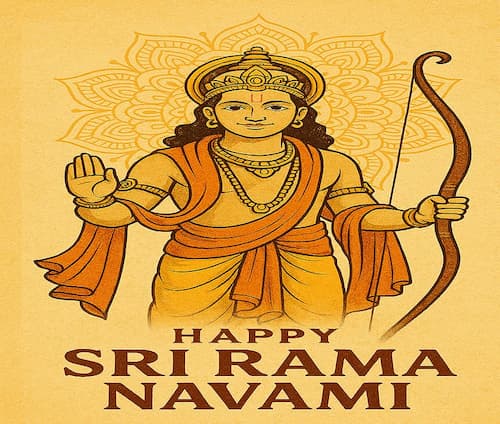
Hapy Rama Navami
Rama Navami Celebrations Gallery
Witness the vibrant celebrations across India
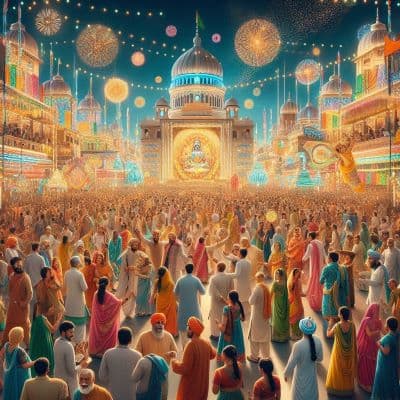
Temple Decorations
Grand decorations in Rama temples

Devotional Puja
Devotees performing special rituals
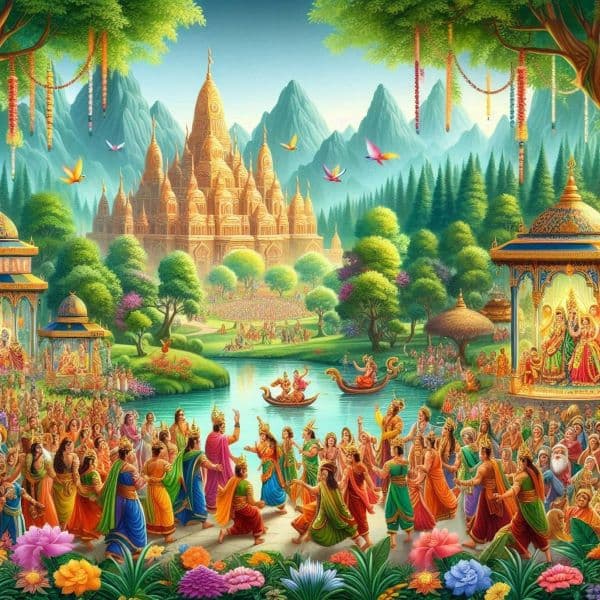
Street Procession
Colorful Rama Navami Shobha Yatra
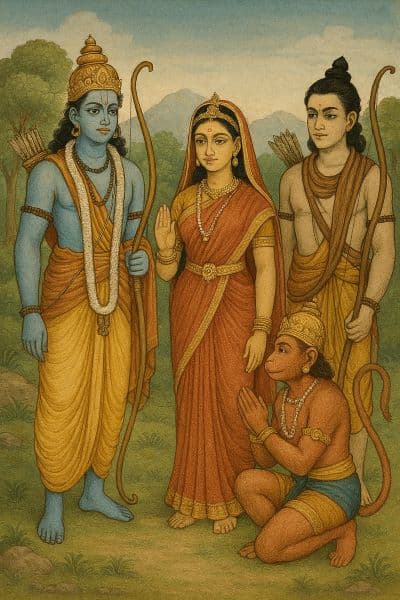
Rama, Sita, Laxman and Hanuma
Rama, Sita, Laxman and Hanuma

Child dressed as Rama
Child dressed as Rama
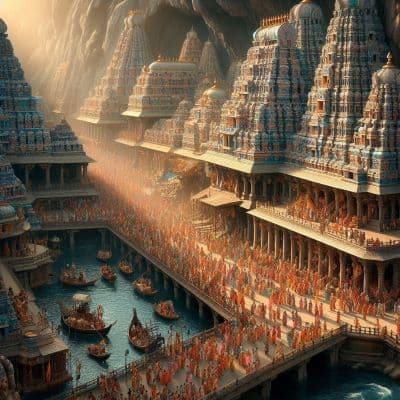
Ayodhya Celebrations
Grand celebrations at Ram Janmabhoomi
Significance of Rama Navami
Spiritual Importance
Rama Navami marks the victory of good over evil and light over darkness. It reminds devotees to follow the path of righteousness and truth in their lives.
Ideal Relationships
Lord Rama's relationships with his parents, brothers, wife Sita, and devotees like Hanuman serve as perfect examples of ideal conduct in various relationships.
Moral Compass
The festival reinforces the importance of fulfilling one's duties (dharma) regardless of personal sacrifices, as demonstrated by Rama throughout his life.
Universal Values
Rama's teachings transcend religious boundaries, offering universal values of truth, honor, compassion, and justice that are relevant across cultures.
Celebration Traditions
Religious Observances
- Day-long fasting and prayers
- Recitation of Ramayana and Rama Katha
- Special pujas in temples and homes
- Bhajans and kirtans dedicated to Lord Rama
- Reading stories from Rama's life to children
Festive Foods
After the day-long fast, devotees break their fast with simple vegetarian food. Panakam (a jaggery and pepper drink) and Kosambari (a lentil salad) are traditionally prepared as offerings.
Community Celebrations
- Processions depicting scenes from Ramayana
- Rath Yatras (chariot processions) in many regions
- Cultural programs and spiritual discourses
- Decorating homes and temples with flowers
- Community meals and charity activities
Special Locations
Ayodhya, believed to be Rama's birthplace, witnesses grand celebrations with millions of devotees. Other important Rama temples across India also host special events.
Explore Other Festivals
Discover the rich cultural heritage of India through its diverse festivals
Frequently Asked Questions
Meaningful Celebration Ideas
Read Ramayana
Dedicate time to read or listen to the epic Ramayana to understand Rama's life and teachings.
Practice Seva
Engage in selfless service to help those in need, following Rama's example of compassion.
Reflect on Values
Spend time reflecting on how to incorporate Rama's virtues into your daily life.
Happy Rama Navami!
May Lord Rama bless you with strength, wisdom, and righteousness
जय श्री राम! जय सिया राम!