Yoga Basics
This guide walks through what “yoga” has meant across history, what you can realistically expect from regular practice, how popular class styles differ, and how yoga pairs with other training. You will also find practical notes for absolute beginners—mat, space, pacing—and a simple way to build a routine that lasts. When you are ready to go deeper, explore yoga asanas, pranayama, meditation, and safety rules.
 Yoga Symbol
What is Yoga? Meaning & History
The word yoga (from Sanskrit yuj) is often translated as union or yoking—suggesting a bringing-together of attention, breath, and action rather than “doing poses on autopilot.” Across Indian history, yoga appeared not as a single fixed sport but as a family of disciplines: ethical living, disciplined practice, working with the body and breath, and steadying the mind. That wider frame explains why two classes labelled “yoga” can feel completely different while still belonging to the same broad tradition.
Philosophical sources such as Patañjali’s Yoga Sūtra (a classical text studied for centuries) outline an eight-limbed path (aṣṭāṅga in a general sense) that includes moral guidelines, posture, breath regulation, withdrawal of senses, concentration, meditation, and deep absorption. You do not need to memorise Sanskrit terms to benefit from class—but knowing that postures (āsana) and breath (prāṇāyāma) sit inside a larger map can deepen respect for the practice and reduce the idea that yoga is “only stretching.”
From classical maps to modern studios
Today, many studios foreground āsana because it is tangible, teachable in a group, and adaptable to different bodies. Prāṇāyāma and seated meditation may appear as shorter segments or separate courses. Some lineages preserve strong devotional or chanting elements; others emphasise anatomy and therapeutic pacing. None of this erases the older layers—it reflects how yoga travelled, translated, and met modern schedules.
As a student, you can honour the tradition by learning from qualified teachers, avoiding caricatures of Indian culture, and remembering that social-media “yoga” often shows advanced shapes rather than everyday, sustainable practice.
 Yoga Benefits
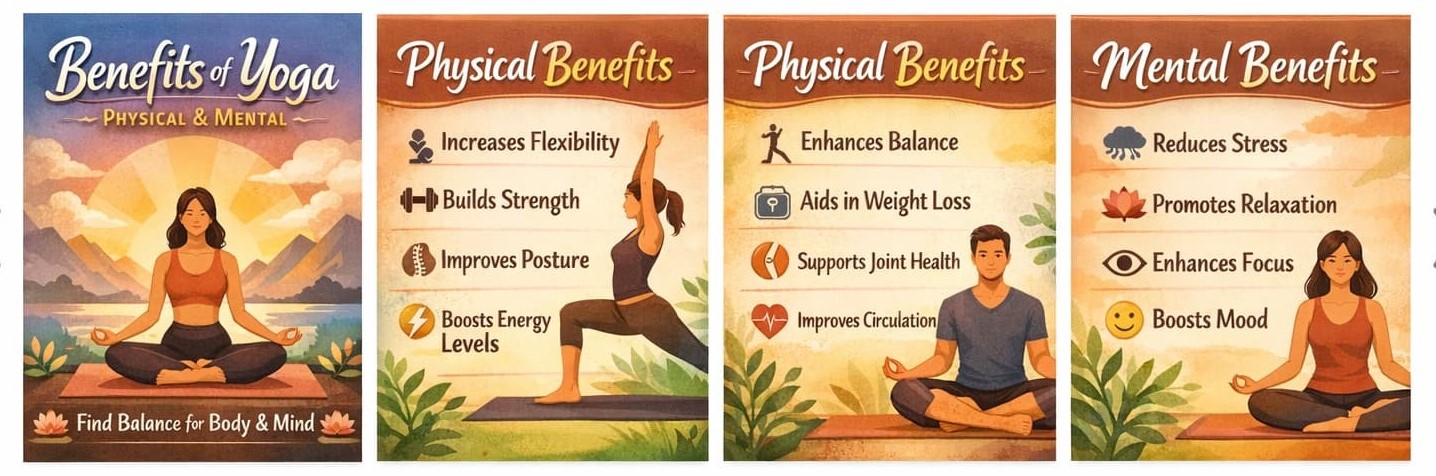
Benefits of Yoga (Physical & Mental)
Benefits depend on how often you practice, how you are taught, and your starting point—age, sleep, nutrition, stress load, and medical history all matter. Yoga is best understood as a long-term habit that nudges the body toward mobility and the nervous system toward steadier regulation, not as a guaranteed cure.
Physical dimensions people often notice
- Range of motion and posture: Repeated, varied āsana can make everyday reaching, bending, and sitting more comfortable when paired with sensible progression.
- Strength and endurance: Holding shapes against gravity, flowing sequences, and repeated transitions load muscles in ways that complement—but do not fully replace—targeted strength training.
- Balance and coordination: Single-leg work and transitions train proprioception, which matters for fall prevention and athletic skill.
- Breathing capacity and rhythm: Coordinated breath cues can encourage slower, fuller breathing at rest and during movement.
Mental and emotional dimensions
- Stress perception: Many practitioners report feeling calmer after practice; mechanisms may include slowed breathing, interoceptive awareness, and time away from screens.
- Attention: Following alignment instructions and breath counts can act like attention training transferable to study or work.
- Sleep and recovery: Gentle evening sequences, relaxation, or light prāṇāyāma (when appropriate) sometimes support wind-down routines—individual responses vary.
Research on yoga is growing but still mixed by population and study design. Treat bold marketing claims skeptically. Yoga is not a substitute for medical diagnosis or treatment; use it alongside qualified professionals for injuries, chronic pain, cardiovascular issues, mental health conditions, pregnancy, or post-surgical recovery.
 Yoga Types
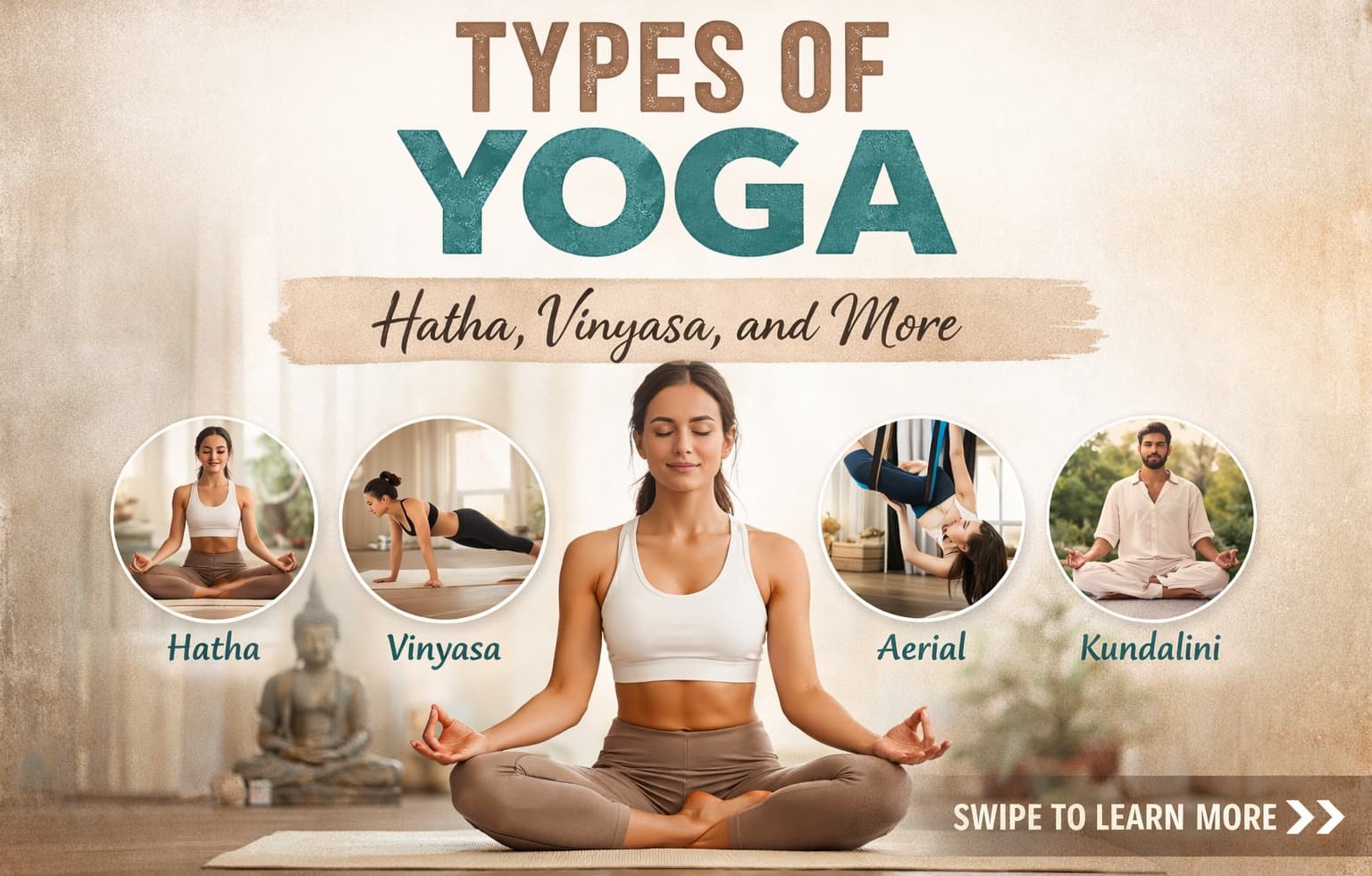
Types of Yoga (Hatha, Vinyasa, and More)
Studio schedules use many brand names; underneath, most classes differ by pace, temperature, hold duration, and how strictly sequences are fixed. Reading a short description—or asking the teacher—prevents signing up for an advanced flow when you wanted slow fundamentals.
Common public-class labels
- Hatha (general): Often slower, with time to adjust alignment in standing and floor poses. Excellent for learning names, safe modifications, and breath basics.
- Vinyasa / flow: Movement linked to inhale-exhale patterns; cardiovascular demand can be moderate to high depending on tempo. Expect repeated sun-salutation-style transitions.
- Ashtanga-inspired: Repeating set series with a disciplined rhythm; strong and structured—usually better after you understand foundational joints and breath.
- Iyengar-influenced: Precision, props (blocks, straps, chairs), and longer holds to refine alignment—helpful if you are rehab-conscious or detail-oriented.
- Yin / long-hold stretching: Passive poses held minutes at a time, stressing connective tissue gently; not ideal immediately after acute injury—check with a professional.
- Restorative: Fully supported, rest-dominant poses; very low physical strain, emphasising down-regulation of the nervous system.
- Hot / heated classes: Added sweat and perceived flexibility; heat increases dehydration and faintness risk—hydrate, pace yourself, and avoid if your doctor restricts heat exposure.
It is normal to blend styles over a week: for example, one slower alignment class, one brisk flow, and one restorative session. Listen to recovery signals rather than chasing novelty every day.
 Yoga versus Exercise
Yoga vs Exercise
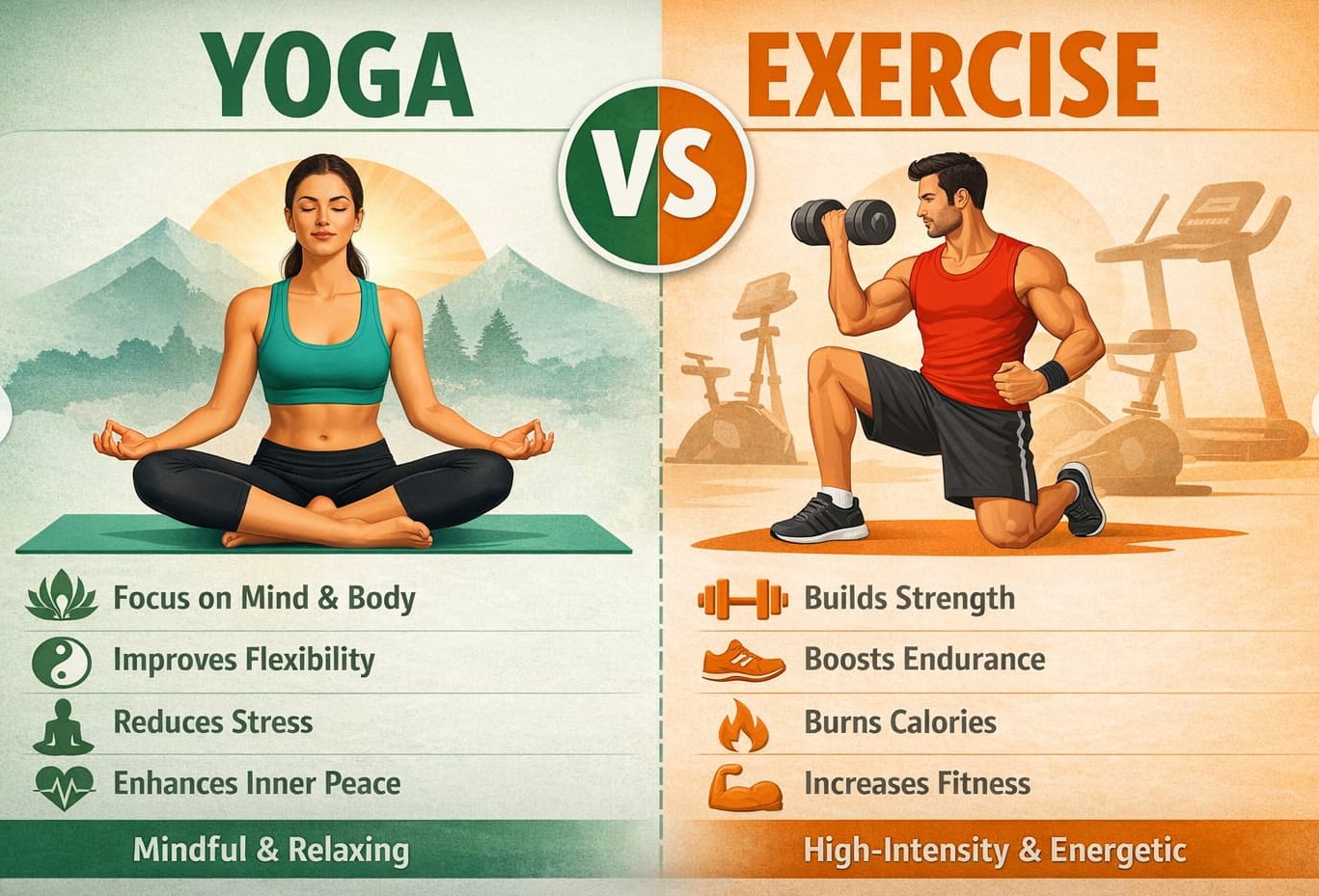
Conventional exercise (gym machines, running, team sports) frequently optimises measurable outputs: load lifted, pace, reps, heart-rate zones, or competition outcomes. Yoga as commonly taught still builds strength and stamina, but it usually foregrounds how you move—joint tracking, breath timing, and the quality of attention—rather than maximising numbers every session.
Overlaps and distinctions
- Skill focus: Yoga rewards balance, controlled transitions, and breath coordination; many gym programmes reward peak force or speed in specific patterns.
- Recovery: Easy mobility-focused yoga can slot between heavy training days to maintain range of motion and parasympathetic tone.
- Cardiovascular training: Vigorous vinyasa can raise heart rate, but it may not replace structured cardio if your goals include specific endurance benchmarks—many people combine both.
- Injury context: Both disciplines risk overload if volume jumps too fast; yoga is not automatically “safe”—alignment errors and competitive mindset matter here too.
Neither approach is morally superior; they answer different questions. A blended week might include two strength sessions, one or two cardio bouts, and two shorter yoga practices emphasising hips, spine, and breath—adjust ratios to your goals and medical guidance.
 Mat & props — decorative
Yoga for Beginners
Your first months should emphasise habit, safety, and curiosity rather than advanced shapes. Short, repeatable sessions beat occasional marathon practices. Aim to finish feeling clearer and more comfortable—not wiped out or sore for days.
Space, gear, and clothing
- Mat: Choose a non-slip surface thick enough for your knees; a towel on a grippy mat helps if you sweat easily.
- Props: Blocks, a strap, and a firm blanket raise the floor toward you so joints stay happy while you learn.
- Room: Clear enough floor space to lie down with arms overhead and step wide to the sides; ventilation and neutral lighting reduce dizziness.
- Clothing: Layers you can remove; nothing that traps you in deep stretches or hides alignment from a teacher offering corrections.
Learning paths
In-person beginners’ courses give real-time feedback on knees, neck, and lower back—valuable if you have old injuries. If you learn online, favour instructors who demonstrate modifications, name contraindications, and discourage bouncing or forcing end-range joints. Pause the video whenever breathing becomes ragged; that is your tempo, not the narrator’s.
Breath, sensation, and etiquette
Let nasal, steady breathing lead range: if you cannot maintain a smooth exhale, you have likely gone too deep or too fast. Dull muscular effort can be workable; sharp joint pain, numbness, or headache is not—stop and reassess. In group classes, arrive a few minutes early, inform the teacher about pregnancy or injuries, and avoid comparing your chapter one to someone else’s chapter ten.
 Routine & calm — decorative
How to Start a Daily Routine
A routine sticks when it respects your chronotype (morning vs night energy), workload, and household rhythm. Anchor practice to an existing habit—after brushing teeth, before dinner prep, or right after logging off work—so willpower is not doing all the lifting.
Sample structure for a typical week
- Three “core” days (20–35 minutes): Warm-up, standing poses or moderate flow, short seated breath or relaxation.
- Two “micro” days (8–12 minutes): Joint circles, cat-cow, one balancing pose, legs-up-the-wall or constructive rest.
- One progressive day: When cleared by a teacher, add a modest round of Surya Namaskar or strength-oriented holds.
- One rest or yin/restorative day: Very gentle floor work, breath awareness, or silent walk instead of intense extension.
Tracking without obsession
A simple calendar checkmark or note on your phone—“steady breath,” “tight hips,” “great sleep”—helps you spot patterns. If motivation dips, shrink the commitment (five minutes of breathing counts) rather than abandoning the chain. Seasonal illness, travel, and family emergencies will interrupt; resume at a lower volume instead of compensating with extreme sessions.
Pair movement with one non-physical yoga limb occasionally: a few minutes of journaling, kind speech, or digital sunset to support the same nervous-system goals as the mat. Over months, these small repetitions compound into posture, mood, and resilience shifts that a single intense weekend rarely produces.