The Boy Who Cried Wolf
Narrator: That night he sat alone on the hill, sorry and sad, knowing trust is hard to earn and easy to lose.
Story Summary
A bored shepherd boy tricks villagers by shouting Wolf! when there is no danger. They run to help twice, then stop trusting him. When a real wolf attacks the flock, no one believes his cries.
This powerful fable teaches honesty and trust. Children learn why lying for fun can have serious consequences when truth matters most.
What Kids Learn
- Tell the truth: Lies damage trust.
- Think before you act: The boy wanted excitement but hurt others.
- Trust is precious: Once broken, trust is hard to rebuild.
- Responsibility matters: He had an important job protecting sheep.
- Words have consequences: What we say affects how others respond.
Main Characters
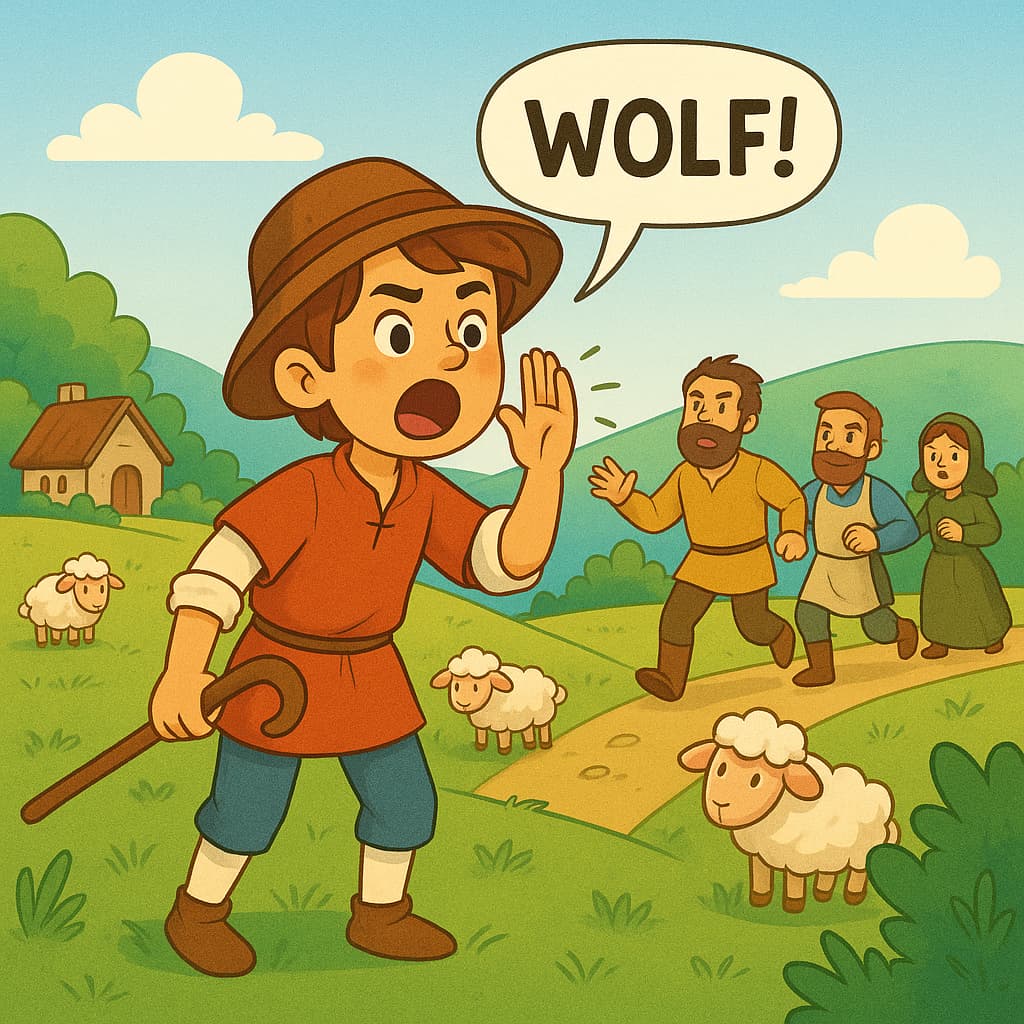
This story follows a young shepherd boy, the villagers who trust him, and the wolf that brings real danger. It is a clear lesson about honesty.
The Shepherd Boy
A young boy tasked with watching the village sheep who becomes bored and plays tricks on the villagers.
The Villagers
Hardworking people who initially respond to the boy's cries for help but eventually lose trust in him.
The Wolf
A dangerous predator that threatens the flock when it actually appears.
The Story
Scene 1: The Shepherd's Duty
Narrator: Once upon a time, there was a young shepherd boy who was given the important job of watching over the village's flock of sheep. Every day, he would take the sheep to a hillside near the forest to graze.
Narrator: His duty was serious - he had to protect the sheep from wolves and other dangers. But the boy found the work boring and longed for some excitement.
Narrator: He kicked at stones on the hillside and sighed, not thinking about how much the villagers depended on him.
"This is so boring! All I do is watch these sheep eat grass all day. I wish something exciting would happen."
A Mischievous Idea
Narrator: The boy had a mischievous idea. He decided to trick the villagers into thinking a wolf was attacking the flock, just to see them come running.
"Wolf! Wolf! A wolf is attacking the sheep! Help! Help!"
The First False Alarm
Narrator: Hearing his cries, the villagers dropped their work and ran up the hill to help the boy chase away the wolf. But when they arrived, they found the boy laughing and the sheep peacefully grazing.
"Where is the wolf? We came as fast as we could!"
"There is no wolf! I was just joking. It was so funny to see you all come running!"
"Don't cry wolf when there is no wolf, boy. This is not a joking matter!"
The Second Trick
Narrator: A few days later, the boy became bored again and decided to play the same trick. Once more, he cried "Wolf! Wolf!" and the villagers came running to help.
"You fooled us again! Don't you understand how serious this is? We have important work to do!"
The Real Wolf Appears
Narrator: Later that week, while the boy was watching the sheep, a real wolf suddenly came out of the forest and began attacking the flock.
Narrator: Terrified, the boy cried out as loudly as he could.
"Wolf! Wolf! Please help! A real wolf is here! He's eating the sheep! Help me, please!"
No One Comes
Narrator: The villagers heard his cries, but they thought it was another one of his tricks. They shook their heads and continued with their work, ignoring the boy's desperate pleas.
"That boy is trying to fool us again. We won't waste our time running up that hill for one of his jokes."
The Consequences
Narrator: With no one coming to help, the wolf attacked the flock freely. Several sheep were killed or scattered before the wolf finally left. The boy learned a hard lesson that day about the consequences of lying.
"I should never have lied. Now when I really needed help, no one believed me."
Moral of the Story
No one believes a liar, even when they are telling the truth. Lying destroys trust, and once trust is broken, it's very difficult to regain. Always tell the truth so people will believe you when it really matters.
Discussion Points
Talk with your child about why the villagers stopped believing the boy. Discuss times when telling the truth might be difficult but is still important. Ask them how they would feel if someone lied to them repeatedly.
Kids Activities
- Draw the boy on the hill with sheep.
- Retell why villagers stopped coming.
- Write a promise about telling the truth.
- Role-play what the boy should have done.
- Discuss how it feels when someone lies to you.