The Honest Woodcutter
Story Summary
A poor woodcutter drops his iron axe into a river. A fairy offers golden and silver axes, but he honestly says they are not his. Pleased with his truthfulness, she rewards him with all three axes.
This timeless tale shows that honesty is rewarded. It helps children choose integrity even when lying might seem easier.
What Kids Learn
- Honesty is best: Truth builds trust and respect.
- Do not take what is not yours: He refused gold and silver axes.
- Integrity brings rewards: His honesty helped his family.
- Be truthful under pressure: Even when tempted, he told the truth.
- Character over riches: Doing right matters more than quick gain.
Main Characters
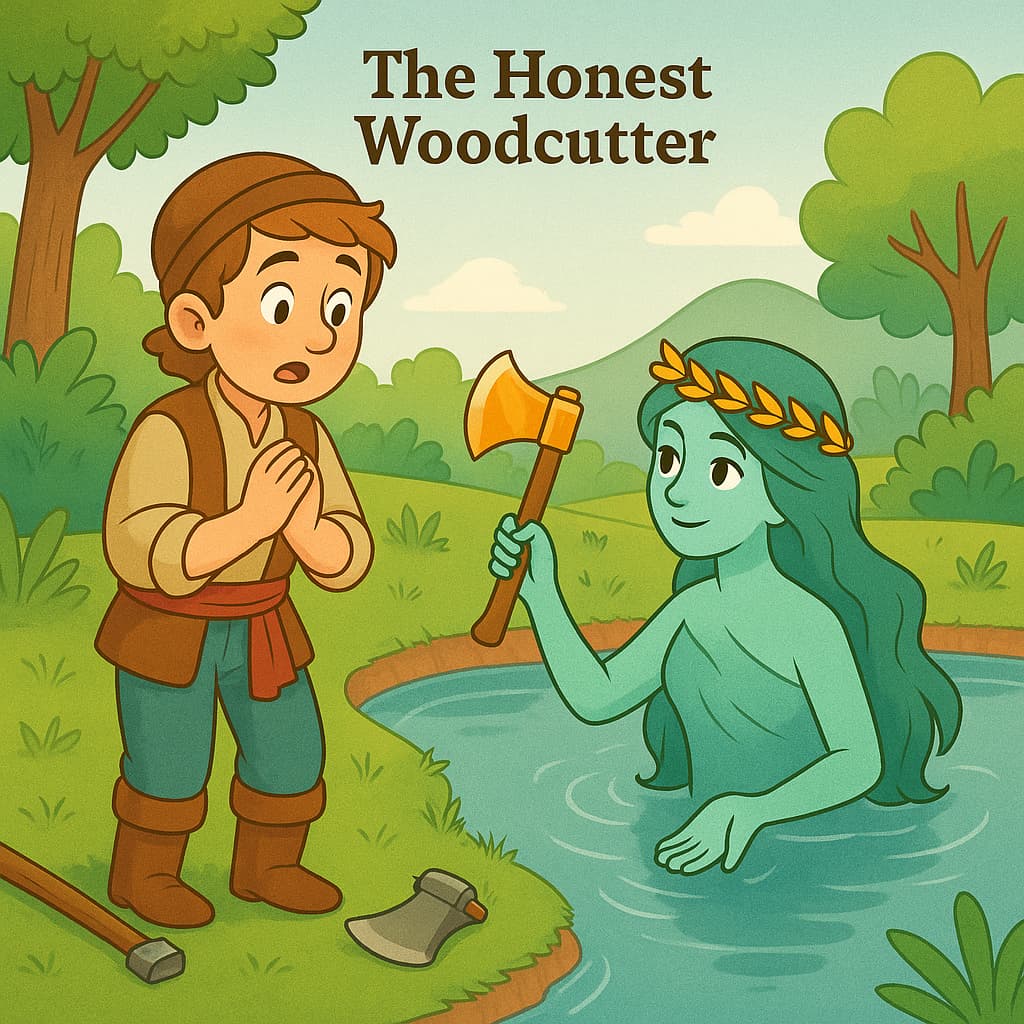
This fable features a hardworking woodcutter and a magical fairy who tests his honesty by the river.
The Woodcutter
A poor but honest man who works hard every day cutting wood to support his family.
The Fairy
A magical being who tests the woodcutter's honesty and rewards his integrity.
The Story
Scene 1: The Woodcutter's Work
Narrator: Once upon a time, there lived a poor woodcutter in a small village. Every day, he would go to the forest to cut wood, which he would then sell in the market to buy food for his family.
Narrator: One day, while cutting wood near a river, the woodcutter's axe slipped from his hands and fell into the deep water. The woodcutter couldn't swim, and the river was too deep for him to retrieve his axe.
Narrator: He stared into the clear water, wondering how he would feed his children if the axe was truly gone forever.
"Oh no! My axe! How will I cut wood now? How will I feed my family without my axe?"
The Fairy Appears
Narrator: As the woodcutter sat by the river crying, a fairy appeared from the water. She had heard his cries and came to help.
"Why are you crying, good man?"
"My axe fell into the river. It was my only means of earning a living. Without it, I cannot feed my family."
"Do not worry. I will help you."
The First Test
Narrator: The fairy dove into the river and came up with a golden axe.
"Is this your axe?"
"No, that is not my axe. My axe was made of iron, not gold."
The Second Test
Narrator: The fairy dove into the river again and came up with a silver axe.
"Is this your axe?"
"No, that is not my axe either. My axe was made of simple iron."
The Third Test
Narrator: The fairy dove into the river one more time and came up with an iron axe.
"Is this your axe?"
"Yes! Yes, that is my axe! Thank you so much!"
The Reward
Narrator: The fairy was very pleased with the woodcutter's honesty. She gave him all three axes - the iron one, the silver one, and the golden one - as a reward for his truthfulness.
"Your honesty has impressed me. I reward you with all three axes. May you and your family live happily and prosperously."
A Happy Ending
Narrator: The woodcutter returned home with the three axes. He sold the silver and golden axes and became wealthy. But he never forgot the importance of honesty and continued to live as a good and truthful man.
Narrator: Neighbors heard the tale and admired his honesty. His children grew up proud to tell the story of their truthful father.
Moral of the Story
Honesty is the best policy. Always tell the truth, even when it might seem easier to lie. Honesty is always rewarded in the long run.
Discussion Points
Talk with your child about times when it might be tempting to tell a lie, and discuss why honesty is important. Ask them how they felt when they told the truth in a difficult situation.
Kids Activities
- Draw the woodcutter, river, and three axes.
- Retell why the fairy rewarded him.
- Write about telling the truth when it was hard.
- Play a mine vs not-mine sorting game.
- Discuss finding something valuable.