Holi - Festival of Colors
Celebrating the victory of good over evil and the arrival of spring
Holi 2026: Date & Auspicious Timings
Holika Dahan 2026
Tuesday, March 3, 2026
Holika Dahan Muhurat: 06:24 PM to 08:52 PM (Duration: 2 hrs 28 mins)
Purnima Tithi Starts: 07:02 PM on Mar 2, 2026
Purnima Tithi Ends: 04:05 PM on Mar 3, 2026
Rangwali Holi 2026
Wednesday, March 4, 2026
The main day of color play will be celebrated on this day across most of India.
*Timings are for New Delhi, India. Variations may occur based on your location and regional panchangam.
Festival of Colors
People play with colored powders and water, celebrating with joy and enthusiasm
Special Foods
Enjoy traditional sweets like gujiya, thandai, and other festive delicacies
Unity & Togetherness
Breaking social barriers and strengthening relationships
About Holi
Holi, also known as the Festival of Colors, is a popular ancient Hindu festival that marks the arrival of spring and the victory of good over evil. It is celebrated with immense joy and enthusiasm across India and in many parts of the world.
The festival typically lasts for two days. The first evening is known as Holika Dahan or Chhoti Holi, when people gather around bonfires to celebrate the burning of the demoness Holika. The following day is called Rangwali Holi, when people play with colors, drench each other with water, and celebrate with music and dance.
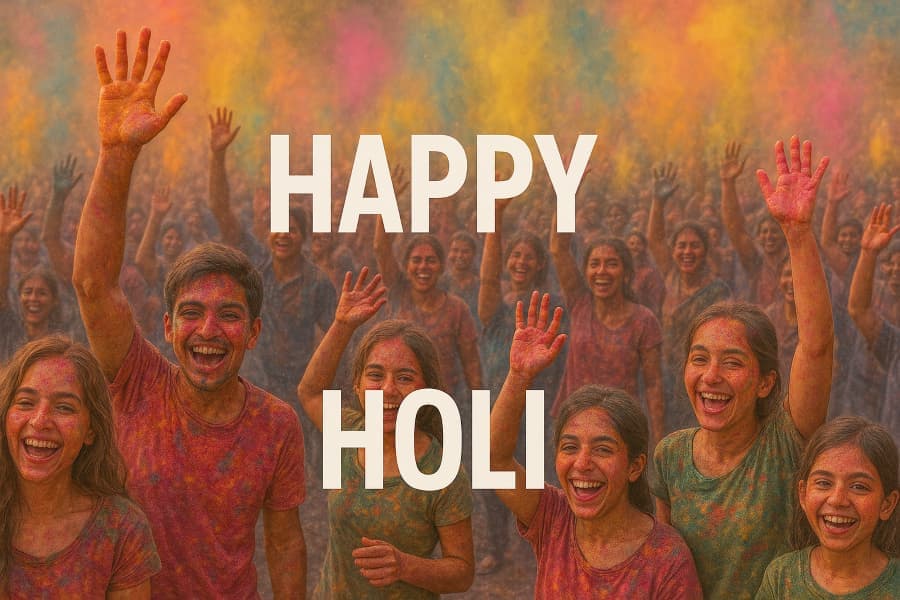
Traditional Holi celebrations
The Legends Behind Holi
Holika Dahan: Victory of Devotion
According to the Bhagavata Purana, King Hiranyakashipu demanded everyone worship only him. His son, Prahlad, remained devoted to Lord Vishnu. The king's sister Holika, who had a boon making her immune to fire, sat with Prahlad in a bonfire. However, Holika's boon worked only when she entered fire alone. She was burned to ashes, while Prahlad survived unharmed, symbolizing the victory of good over evil.
Krishna & Radha: The Colors of Love
Lord Krishna, who had dark blue skin, complained to his mother Yashoda about why Radha was so fair. Yashoda playfully suggested Krishna can apply any color he wanted on Radha's face. Krishna then playfully colored Radha, starting the tradition of playing with colors. This legend is especially celebrated in Mathura, Vrindavan, and Barsana (Lord Krishna's birthplace).
Holi Traditions
Holika Dahan
On the eve of Holi, people light bonfires to symbolize the burning of the demoness Holika and the victory of good over evil. They perform rituals and pray for the destruction of their internal evils.
Music & Dance
Holi celebrations are incomplete without traditional folk songs, dances, and the rhythmic beats of dholak. People sing Holi songs and dance with joy and enthusiasm.
Exchanging Sweets
People visit friends and relatives, exchange sweets, and apply colors on each other's faces. Traditional Holi sweets like gujiya, malpua, and puran poli are prepared and shared.
Playing with Colors
The main day of Holi is celebrated with colored powders (gulal) and water. People chase each other with colors, water balloons, and water guns, forgetting all differences and animosities.
Regional Celebrations Across India
Mathura & Vrindavan
Lathmar Holi, Widow's Holi — 40-day celebration at Krishna's birthplace
Punjab
Hola Mohalla — Martial arts displays by Nihang Sikhs
West Bengal
Dol Jatra — Idols of Krishna and Radha on decorated swings
Rajasthan
Royal Holi — Elephant processions and folk performances in Udaipur and Jaipur
Holi Gallery
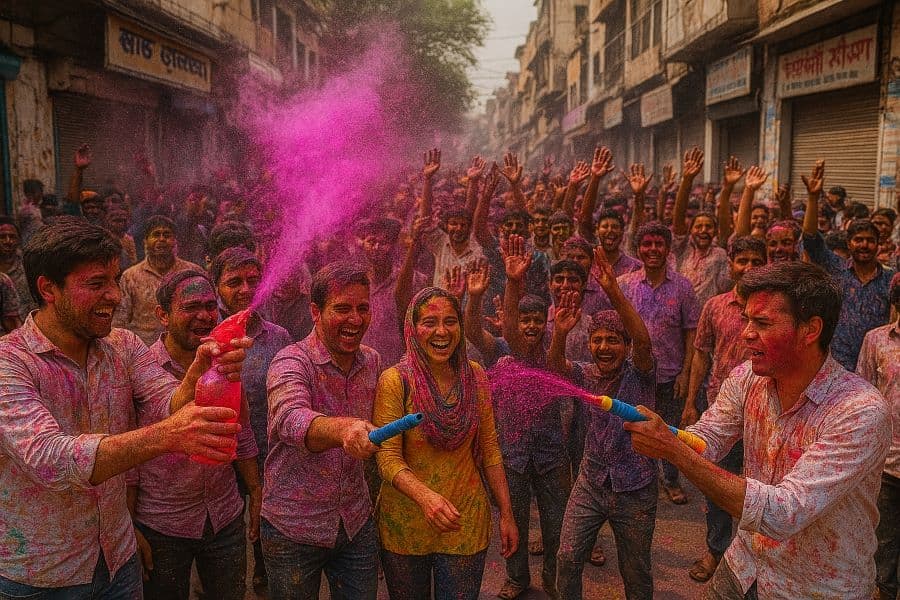
Color Play
People celebrating with colored powders
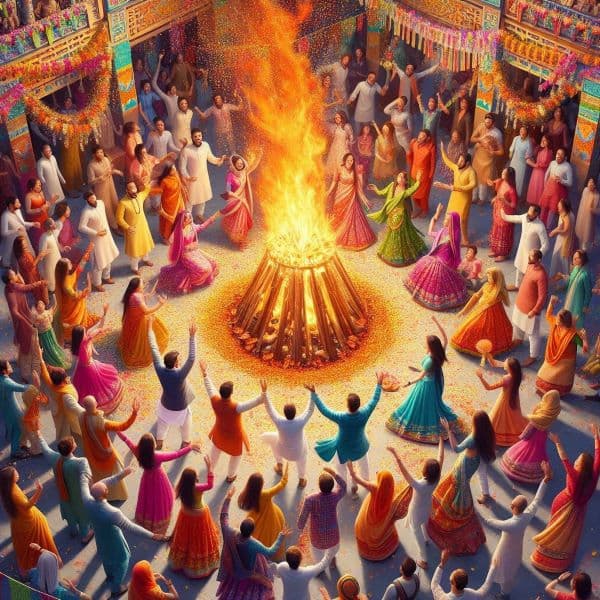
Holika Dahan
Bonfire on the eve of Holi
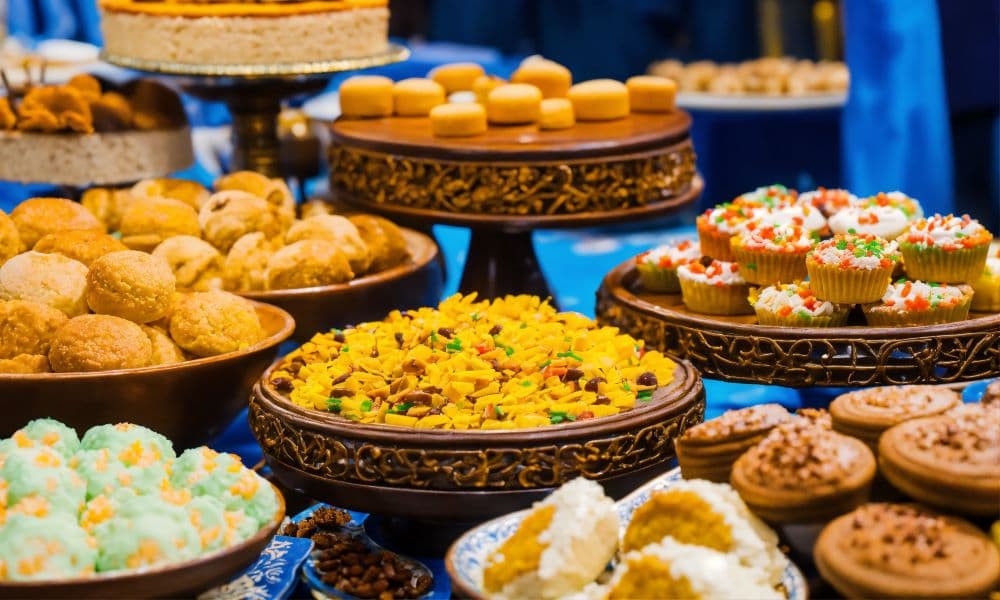
Festive Sweets
Traditional Holi delicacies
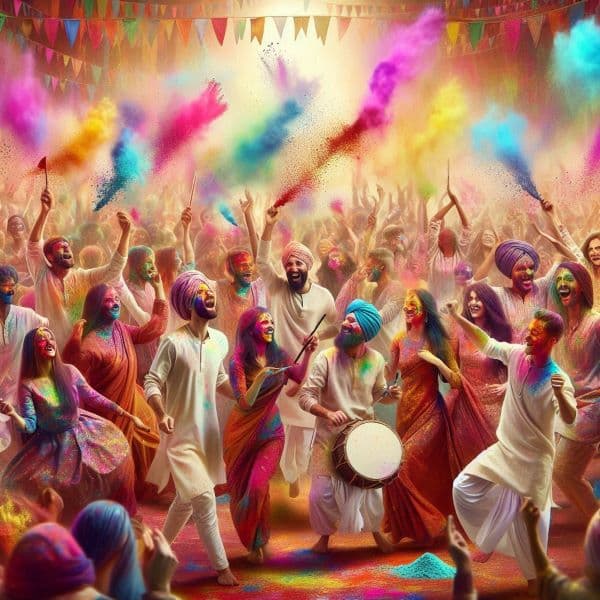
Music & Dance
Traditional Holi songs and dances
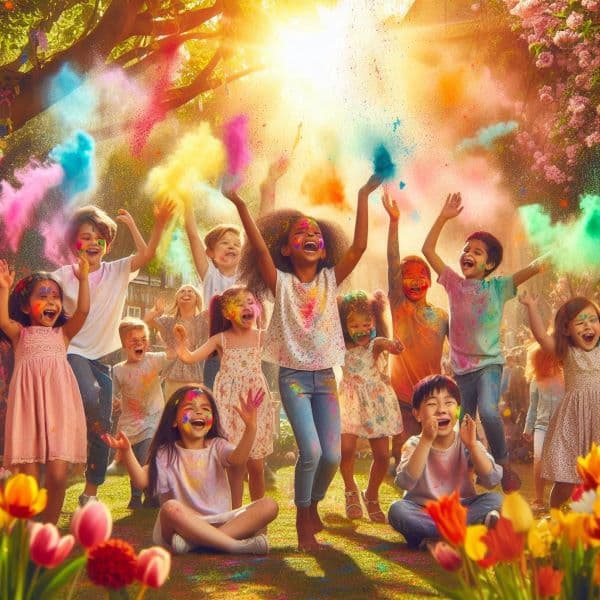
Children Holi Play
Playing children with water guns and balloons
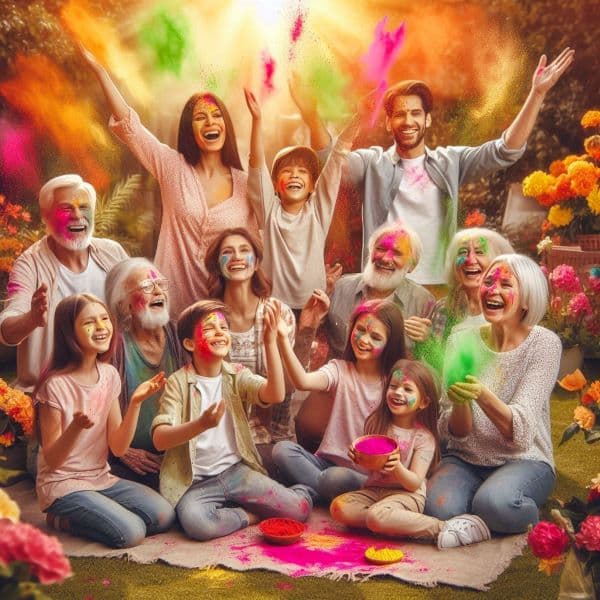
Unity
Strengthening relationships and bonds
Holi in the Telugu Festival Calendar
Planning your Holi celebrations becomes easier when you see it in the wider sequence of Telugu observances. Families often compare customs from Ugadi, Sankranti, Rama Navami, Krishna Janmashtami to understand how seasonal rituals, fasting practices, and temple visits connect across the year.
For a broader cultural background, read About Telugu Festivals. That overview helps students and families understand how regional panchangam traditions shape puja timing, community events, and local variations from one festival page to another.
Explore Other Festivals
Discover the rich cultural heritage of India through its diverse festivals
Eco-Friendly Holi Celebration
Use Natural Colors
Choose organic, plant-based colors instead of synthetic ones that harm skin and environment.
Conserve Water
Play a dry Holi or use limited water to avoid wastage of this precious resource.
Respect Consent
Always ask before applying colors to others and be mindful of people's preferences.
Traditional Holi Sweets & Drinks
Gujiya
Sweet dumplings filled with khoya, dried fruits, and nuts
Thandai
Chilled milk-based drink infused with almonds, fennel seeds, and sometimes bhang (in traditional celebrations)
Malpua
Sweet pancakes deep-fried and soaked in sugar syrup
Safety Tips for a Joyful Holi
- Use only natural, organic colors
- Apply coconut oil on skin and hair before playing
- Protect your eyes with sunglasses or goggles
- Keep pets and birds away from colors and loud noises
- Avoid synthetic colors containing chemicals like lead or mercury
- Stay hydrated before and during celebrations
- Never mix colors with water balloons for throwing at strangers
- Wash colors with mild soap, avoid harsh scrubbing
When Is Holi Celebrated?
Holi is celebrated around Phalguna Purnima, with Holika Dahan on the full moon night and Rangwali Holi the following day.
As a lunar full-moon festival, Holi moves each year across February and March.
Upcoming Holi Dates (2025-2030)
| Year | Holika Dahan | Rangwali Holi |
|---|---|---|
| 2025 | Thursday, March 13 | Friday, March 14 |
| 2026 | Tuesday, March 3 | Wednesday, March 4 |
| 2027 | Monday, March 22 | Tuesday, March 23 |
| 2028 | Friday, March 10 | Saturday, March 11 |
| 2029 | Wednesday, February 28 | Thursday, March 1 |
| 2030 | Tuesday, March 19 | Wednesday, March 20 |
Practical note: festival dates can differ by region, temple tradition, and the panchangam or calendar (amanta/purnimanta, drik/vakya) followed locally, so always confirm with your local almanac.